“This is really awesome. “

Posted April 2018 by Andrew Arnold:  “Wow Soph! This is really awesome. I want to hear more about the Judy Chicago exhibit — like what part of it stood out to you the most?”

Sorry it took me so long to get back to you. That’s a really interesting question, I think what stood out to me the most was how bold the exhibit was. What she did had never been done before. It shocked me that she created such a powerful piece of art so ground-breaking at the time. Even today the piece is powerful and pushes people to think about women’s role in history.

Mary Bowser, Elizabeth Van Lew, and The Grimke Sisters

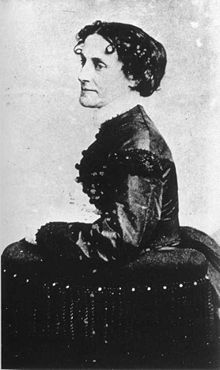
220px-ElizabethVanLew

Elizabeth Van Lew

Unknown

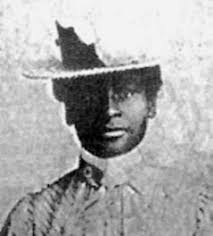
Mary Bowser

In my first blog I wrote about Sarah Grimke and her sister Angelina. Just like her sister, Angelina Grimke was an abolitionist and advocate for women rights.  On February 21, 1838 Sarah Grimke was supposed to speak in front of the Massachusetts state legislature, yet she was sick, so her sister did it for her. Angelina would be the first American woman to ever speak in front of a legislative group like that.  Angelina was very nervous to be speaking, and she wrote about her jitters right before she went on. I read about it in Gerda Lerner’s book The Grimke Sisters from South Carolina: Pioneer’s for Woman’s Rights and Abolition .  Elizabeth Van Lew, one of Angelina and Sarah’s friends and a staunch abolitionist,  put her hand on Angelina’s shoulder for comfort.  This led me to research about Elizabeth Van Lew.  Elizabeth was not only an abolitionist, she was also a Union spy.  Part of her political activism was releasing all of her family’s slaves after her father died.  Before that, she was even able to send one of her family’s slaves away from the South to be properly educated.  That slave was Mary Bowser, and Mary Bowser also became a Union Spy.  I read about Mary Bowser in the book Rejected Princesses by Jason Porath.  I highly recommend the book.  Elizabeth Van Lew helped to get Mary Bowser placed the Confederate White house posing as a slave.  Mary Bowser’s espionage techniques included using notes sewn into dresses that she took out for alteration that were then sent on to the Union, as well as putting out certain colors of washing on the line to  convey messages to Van Lew and other agents. Perhaps Mary Bowser’s greatest act of undermining the Confederate government was to set fire to the Confederate White house, the fire ruined most of the house and Bowser managed to get away and fled North. Keep in mind, though that due to the fact that Mary Bowser was in fact a spy, she had to use several aliases and Mary Bowser might not have been her real name. My next post will focus on the complicated and maybe contradictory relationships between White Southern Women and Black Southern Women working to end Slavery during the Civil War, such as the one between Mary Bowser and Elizabeth Van Lew.
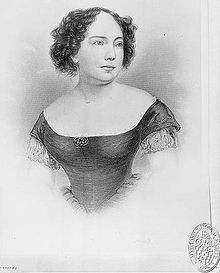
Anna Ella Carroll Civil War Strategist and Advisor to Lincoln

Anna Ella Carroll was born in 1815 and raised in a very political household. Her father was a two-term governor of Maryland from 1830-1831.  Anna’s father educated her to be his aide, he taught her politics and the law.  It was very rare for a woman to be educated in these areas and actively involved, and yet she was. She not only wrote about political issues, her writing was used to sway Maryland not to secede during the Civil War. Later during the Civil War Anna wrote political pamphlets that supported Lincoln, and assisted his generals and cabinet with military information and strategies which were used to eventually win the war. Historians debate how much Anna Ella Carroll contributed.  However, what was most important and impressive was that Anna requested to be paid a pension for her military service, to be recognized publicly for her contribution, whatever that was. Anna did not receive recognition or a pension during her lifetime, that did not stop her from writing and speaking out, still she persisted.

220px-Anna_Ella_Carroll

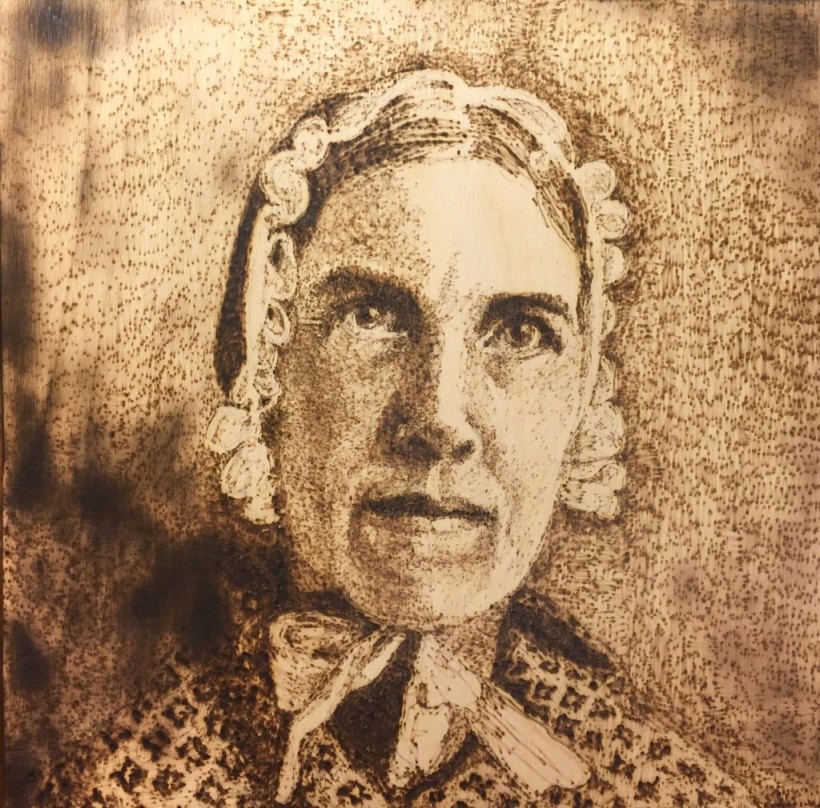
Sarah Grimke – Advocate for Women’s Rights and African American Rights

Lately I’ve been researching Sarah Grimke and her sister Angelina. I was shocked to find out that Sarah, who wrote and spoke out strongly against slavery, grew up in a place surrounded by slavery. After some more digging I found out that when Sarah was a little girl she saw her Dad whip a slave girl. Little Sarah knew that what she saw was wrong, even though it was the way of life all around her. I  know that rebelling against your parents isn’t exactly uncommon, but often on important issues you’ll follow their lead. Yet, Sarah Grimke held onto her deep feelings against slavery. larger